Enabling shore power cruise connections ahead of a global event
The challenge: Clean port operations in a growing destination
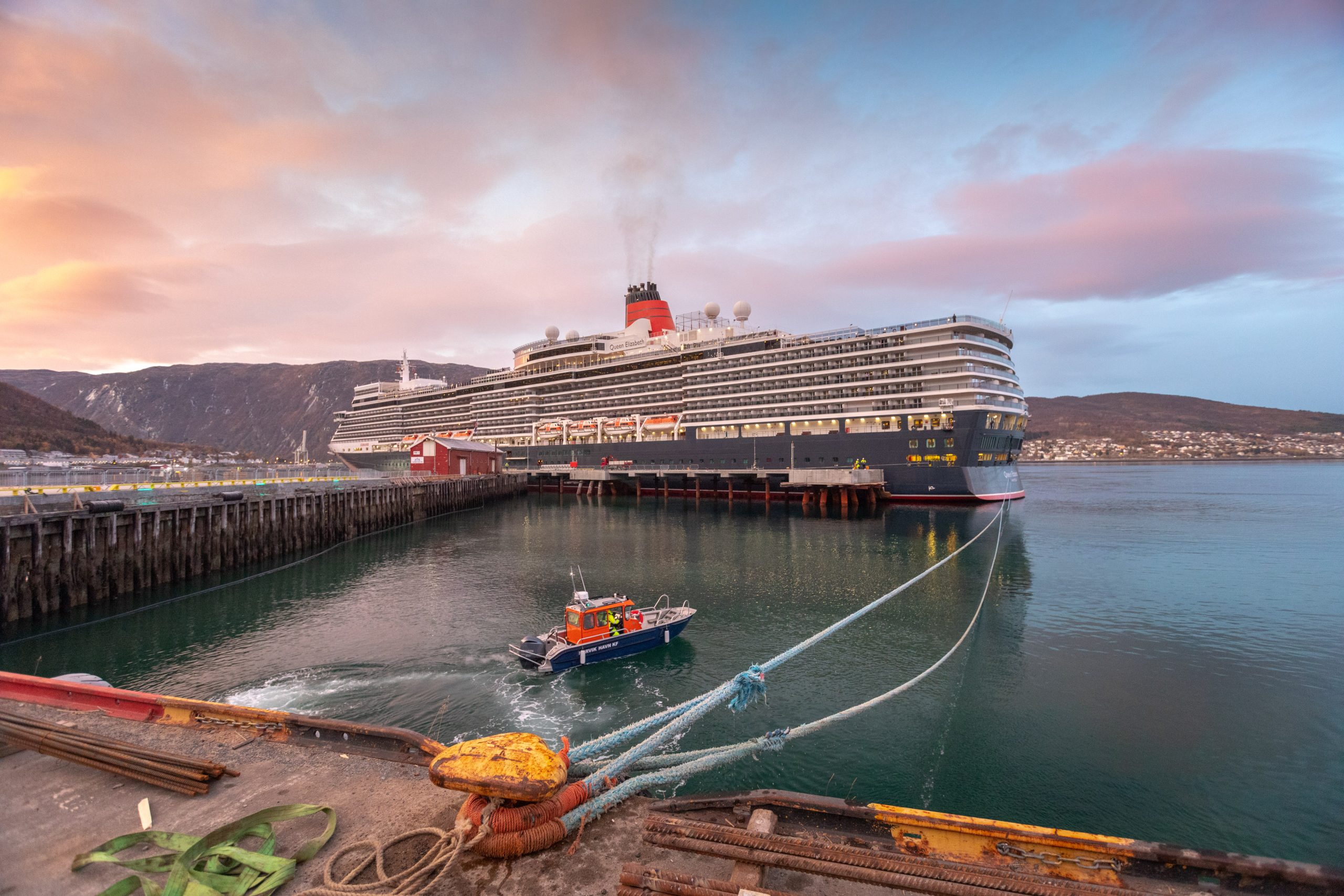
Narvik is developing rapidly as an Arctic destination, and the Port of Narvik has identified shore power as a key measure to reduce emissions and noise from cruise calls close to the city centre. In parallel, Narvik has been awarded the FIS Alpine World Ski Championships 2029, an international event expected to attract significant visitor volumes and global attention. Because accommodation capacity in the area is limited, the overall event planning includes using cruise ships as floating hotels during the championships, which makes reliable, high‑capacity shore power particularly important to avoid prolonged auxiliary engine use while vessels remain alongside.
Narvik also has a broader role as an intermodal logistics hub in Northern Norway, and the port has in recent years highlighted its importance for preparedness and reception capability, although the shore power project itself is primarily driven by emissions reductions and the need for modern, future‑ready cruise infrastructure.
The solution: A shore power facility for both LV and HV cruise vessels
To serve a wide range of cruise ships, Plug is developing a shore power facility in Narvik that enables connections for both large and smaller cruise vessels. Public project descriptions state that the solution is designed to supply one cruise ship at a time, and that it will include both a high‑voltage facility for larger cruise ships and a low‑voltage facility for smaller cruise vessels, ensuring broad fleet compatibility. The project is being developed in cooperation with the Port of Narvik and Plug Nord, supported by Enova funding of NOK 10.7 million to accelerate implementation and enable cleaner port operations.
The breakthrough: A smarter grid approach reduced connection costs dramatically
A critical early barrier was the cost of making sufficient electrical capacity available at the cruise quay. Initial estimates indicated that it could cost around NOK 100 million simply to bring enough power to the quay, which would have significantly challenged project viability. Through a structured and solution‑oriented dialogue between Plug and the local grid company, the team identified a different technical approach to grid integration and capacity delivery. This alternative concept reduced the estimated cost substantially—from around NOK 100 million to under NOK 10 million—while still supporting the operational needs of both low‑ and high‑voltage cruise supply.
Project scope and status: Support, permits and an operational target
The project has reached key development milestones. Plug Narvik has been awarded NOK 10.7 million in Enova supportand in addition, Norwegian authorities (NVE) have granted Plug Narvik AS a licence to build, own and operate a shore power facility at the cruise quay, including conversion infrastructure located north of the quay and the related cable connections to the ship connection points.
The project is expected to be finalised in Q3 2026, with a total project investment of approximately NOK 93 million, with Enova funding included.
Why Narvik: Shore power as a key enabler for Narvik 2029
What makes Narvik distinct is the combination of destination growth and the practical realities of hosting a world‑class event in an Arctic region. With the FIS Alpine World Ski Championships 2029 approaching, Narvik is planning solutions to accommodate more visitors, including the use of a cruise ship as a floating hotel because hotel capacity in the area is limited. In that scenario, shore power becomes even more critical: it enables vessels to remain alongside for longer periods without running onboard generators, improving local air quality and reducing noise during a highly visible event period.
The way forward
Plug Narvik demonstrates how shore power can be designed for maximum cruise fleet compatibility by providing both high‑ and low‑voltage solutions, while also showing that early technical collaboration with grid stakeholders can unlock dramatically more cost‑effective project delivery. The facility is expected to be operational in 2026 and will help Narvik meet rising expectations for low‑emission cruise operations ahead of 2029, when the city will be in the global spotlight and shore power will be a practical prerequisite for hosting vessels as floating hotels in a sustainable way.
-2.jpg)
Planning for reliable port electrification?
Whether you are evaluating initial deployment or expanding an existing network, we provide structured insight and long term partnership models tailored to complex port environments.